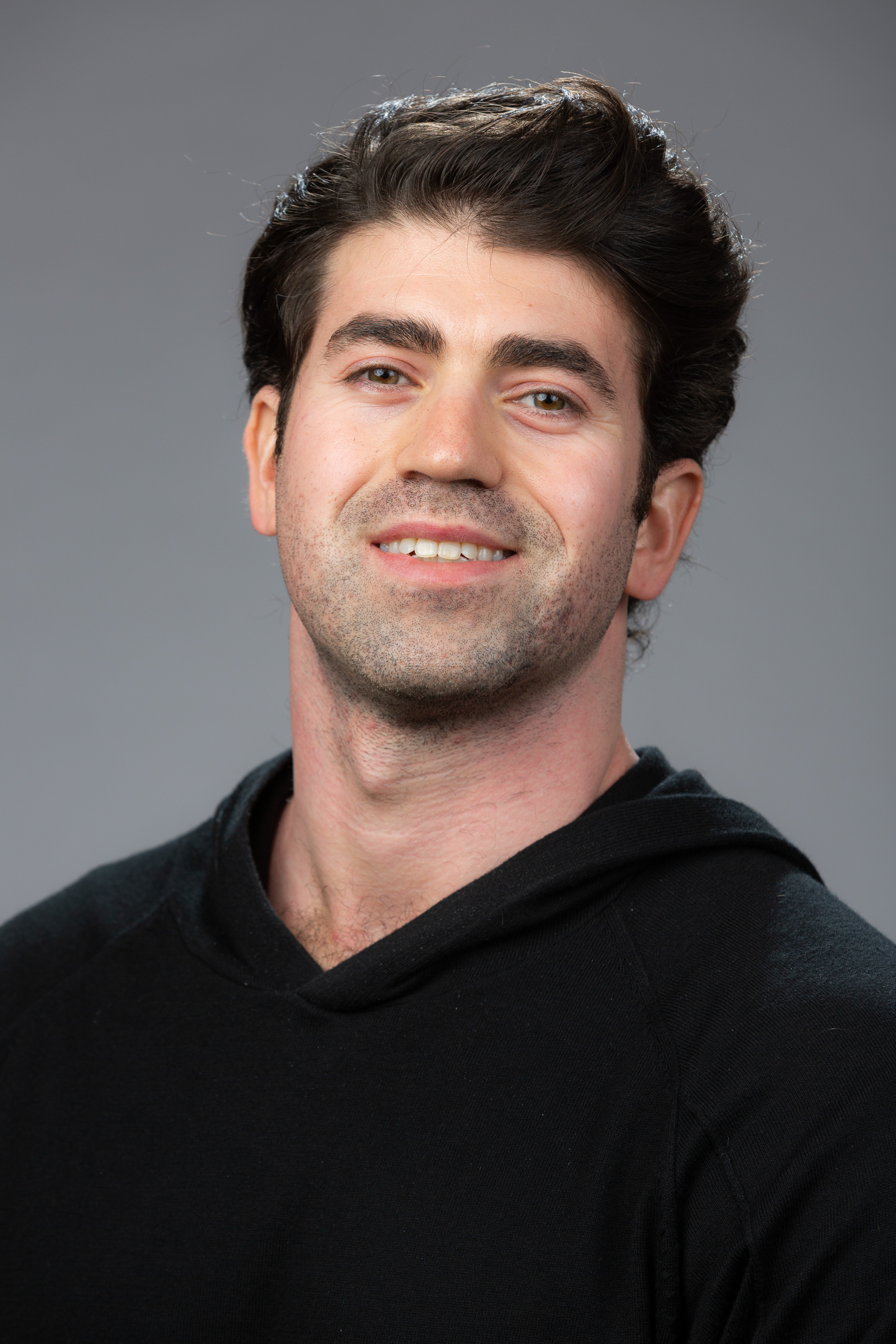
Bio
I am an independent researcher whose work lies at the intersection of machine learning, causal inference, and policy. I hold a Ph.D. in Political Science with a Designated Emphasis in Computational Science and Engineering from UC Berkeley and have held postdoctoral appointments in machine learning and data science.
My current research evaluates frontier AI models by designing evaluation frameworks that measure model capabilities and translate safety concerns into measurable tests. I have published studies on causal inference with multi-valued treatments, Bayesian frameworks for adversarial machine learning, and deep learning-based missing-data imputation and counterfactual prediction.
Highlights: I co-authored Terminal-Bench (ICLR 2026), contributing eight benchmark tasks, including a genome-assembly task featured in the task spotlight, and Humanity's Last Exam (Nature, 2026). Co-authored work on Bayesian adversarial machine learning received the Premio SEIO–Fundación BBVA 2026.
News
Publications
Most recent publications on Google Scholar.
Terminal-Bench: Benchmarking Agents on Hard, Realistic Tasks in Command Line Interfaces
Mike A. Merrill, Alexander G. Shaw, Nicholas Carlini, Boxuan Li, Harsh Raj, Ivan Bercovich, Lin Shi, Jeong Y. Shin, Thomas Walshe, Junhong Shen, Guanghao Ye, Haowei Lin, Jason Poulos, Maoyu Wang, E. K. Buchanan, Jenia Jitsev, Marianna Nezhurina, Di Lu, Orfeas M. Mastromichalakis, ..., Ludwig Schmidt.
International Conference on Learning Representations, 2026
A benchmark of expert-level academic questions to assess AI capabilities
Center for AI Safety, Scale AI & HLE Contributors Consortium
Nature, 2026
State-Building through Public Land Disposal? An Application of Matrix Completion for Counterfactual Prediction
Jason Poulos
Statistics and Public Policy, 2024
Targeted Learning in Observational Studies with Multi-Level Treatments: An Evaluation of Antipsychotic Drug Treatment Safety
Jason Poulos, Marcela Horvitz-Lennon, Katya Zelevinsky, Thomas Huijskens, Pooja Tyagi, Jiaju Yan, Jordi Diaz, Tudor Cristea-Platon, Sharon-Lise Normand
Statistics in Medicine, 2024
Adversarial Machine Learning: Bayesian Perspectives
David Rios Insua, Roi Naveiro, Víctor Gallego, Jason Poulos
Journal of the American Statistical Association, 2023
Awarded the Premio SEIO-Fundación BBVA (2026) for Best Contribution from Statistics and Operations Research to Data Science.
Are Deep Learning Models Superior for Missing Data Imputation in Surveys? Evidence from an Empirical Comparison
Zhenhua Wang, Olanrewaju Akande, Jason Poulos, Fan Li
Survey Methodology, 2022
RNN-Based Counterfactual Prediction, with an Application to Homestead Policy and Public Schooling
Jason Poulos, Shuxi Zeng
Journal of the Royal Statistical Society (C), 2021
Character-Based Handwritten Text Transcription with Attention Networks
Jason Poulos, Rafael Valle
Neural Computing & Applications, 2021
Estimating Population Average Treatment Effects from Experiments with Noncompliance
Kellie Ottoboni, Jason Poulos
Journal of Causal Inference, 2020
Missing Data Imputation for Supervised Learning
Jason Poulos, Rafael Valle
Applied Artificial Intelligence, 2018
Terminal-Bench: Benchmarking Agents on Hard, Realistic Tasks in Command Line Interfaces
Mike A. Merrill, Alexander G. Shaw, Nicholas Carlini, Boxuan Li, Harsh Raj, Ivan Bercovich, Lin Shi, Jeong Y. Shin, Thomas Walshe, Junhong Shen, Guanghao Ye, Haowei Lin, Jason Poulos, Maoyu Wang, E. K. Buchanan, Jenia Jitsev, Marianna Nezhurina, Di Lu, Orfeas M. Mastromichalakis, ..., Ludwig Schmidt.
International Conference on Learning Representations, 2026
A benchmark of expert-level academic questions to assess AI capabilities
Center for AI Safety, Scale AI & HLE Contributors Consortium
Nature, 2026
Revisiting Diabetes Risk of Olanzapine versus Aripiprazole for Serious Mental Illness Care
Denis Agniel, Sharon-Lise Normand, John Newcomer, Katya Zelevinsky, Jason Poulos, Jeannette Tsuei, Marcela Horvitz-Lennon
BJPsych Open, 2024
State-Building through Public Land Disposal? An Application of Matrix Completion for Counterfactual Prediction
Jason Poulos
Statistics and Public Policy, 2024
Targeted Learning in Observational Studies with Multi-Level Treatments: An Evaluation of Antipsychotic Drug Treatment Safety
Jason Poulos, Marcela Horvitz-Lennon, Katya Zelevinsky, Thomas Huijskens, Pooja Tyagi, Jiaju Yan, Jordi Diaz, Tudor Cristea-Platon, Sharon-Lise Normand
Statistics in Medicine, 2024
Antipsychotics and the Risk of Diabetes and Death among Adults with Serious Mental Illnesses
Jason Poulos, Sharon-Lise Normand, Katya Zelevinsky, John Newcomer, Denis Agniel, Haley Abing, Marcela Horvitz-Lennon
Psychological Medicine, 2023
Adversarial Machine Learning: Bayesian Perspectives
David Rios Insua, Roi Naveiro, Víctor Gallego, Jason Poulos
Journal of the American Statistical Association, 2023
Awarded the Premio SEIO-Fundación BBVA (2026) for Best Contribution from Statistics and Operations Research to Data Science.
Gender Gaps in Frontier Entrepreneurship? Evidence from 1901 Oklahoma Land Lottery Winners
Jason Poulos
Journal of Historical Political Economy, 2023
Are Deep Learning Models Superior for Missing Data Imputation in Surveys? Evidence from an Empirical Comparison
Zhenhua Wang, Olanrewaju Akande, Jason Poulos, Fan Li
Survey Methodology, 2022
RNN-Based Counterfactual Prediction, with an Application to Homestead Policy and Public Schooling
Jason Poulos, Shuxi Zeng
Journal of the Royal Statistical Society (C), 2021
Character-Based Handwritten Text Transcription with Attention Networks
Jason Poulos, Rafael Valle
Neural Computing & Applications, 2021
Amnesty Policy and Elite Persistence in the Postbellum South: Evidence from a Regression Discontinuity Design
Jason Poulos
Journal of Historical Political Economy, 2021
Estimating Population Average Treatment Effects from Experiments with Noncompliance
Kellie Ottoboni, Jason Poulos
Journal of Causal Inference, 2020
Land Lotteries, Long-Term Wealth, and Political Selection
Jason Poulos
Public Choice, 2019
Missing Data Imputation for Supervised Learning
Jason Poulos, Rafael Valle
Applied Artificial Intelligence, 2018
Projects
Transformer Models for Diabetes Treatment Failure 2023–2024
Interpretable transformer neural networks trained on over 10 million clinical events from Mass General Brigham electronic health records, combining static and temporal patient features to predict diabetes treatment failure (HbA1c ≥ 7% within 12 months). Compares tabular transformers with a GPT-style autoregressive transformer on patient event streams.
Doubly Robust Causal Inference with Multi-Valued Treatment Regimes and RNNs
Extends the longitudinal targeted minimum loss-based estimator (LTMLE) to multi-valued treatment regimes by modeling treatment assignment with a multinomial model, and integrates recurrent neural networks as an alternative to sequential g-computation. In simulations, the multinomial model improves efficiency over a series of binomial regressions, and LTMLE with RNNs reduces average bias relative to ensemble machine learning. Motivated by the safety of antipsychotic treatment regimes for adults with serious mental illnesses.
Vitæ
Full CV: PDF. Industry resume: PDF.
-
Brigham and Women's Hospital 2023 – 2024Postdoctoral Fellow in Machine Learning
Division of Endocrinology -
Harvard Medical School 2021 – 2023Postdoctoral Fellow in Data Science
Department of Health Care Policy -
SAMSI 2019 – 2021Postdoctoral Associate in Statistics
Causal Inference and Deep Learning programs -
University of California, Berkeley 2013 – 2019Ph.D., Political Science
Designated Emphasis in Computational Science and Engineering -
MIT 2011 – 2013Research Support Associate
Department of Political Science; also a Graduate Special Student taking non-degree graduate coursework in Economics -
Harvard University 2009 – 2011Research Assistant
Department of Economics (at the NBER) and Harvard Decision Science Laboratory (Harvard Kennedy School); also took non-degree graduate coursework in Economics -
University of Massachusetts Amherst 2004 – 2008B.A., Economics
Phi Beta Kappa